
How to Get Court Records
First decide what you need: a free index, one filed paper, a certified copy, or a transcript. Each leads somewhere different. Search Kansas CaseSearch to pull the public case number and the exact event title. The web display can come up thin. If it does, try the free Norton County Public Access Terminal at the courthouse. From there, send a focused written request to the Clerk of the District Court. Fax, mail, email, or in person all work.
- Identify the record type, case number, document title, and date range.
- Check Kansas CaseSearch for basic public details and permitted document links.
- Use the courthouse terminal when a converted public document is absent online.
- Write the clerk with the exact item, preferred delivery method, and certification need.
- Send the request by the county-listed email, fax, mail, or at the counter.
- Wait for the response or cost estimate, then pay the quoted amount before delivery.
The district clerk sits at 105 S Kansas Avenue, 3rd Floor, P.O. Box 70, Norton, KS 67654. Call 785-877-5720. The fax is 785-877-5722, and the current published email is ntdc@kscourts.gov.
Norton County Court Record Requests
Norton County publishes written instructions instead of a local fillable request PDF. Your written request should carry the basics. Give your name and return contact. Name the exact record, with the case number when known. Add a useful date range, the case type if needed, and a delivery preference. Say "certified copy" plainly if certification is required. Leave out anything private the office does not need, such as a Social Security number, driver-license number, or booking number. The official record request and copy fee page walks through the local process step by step.
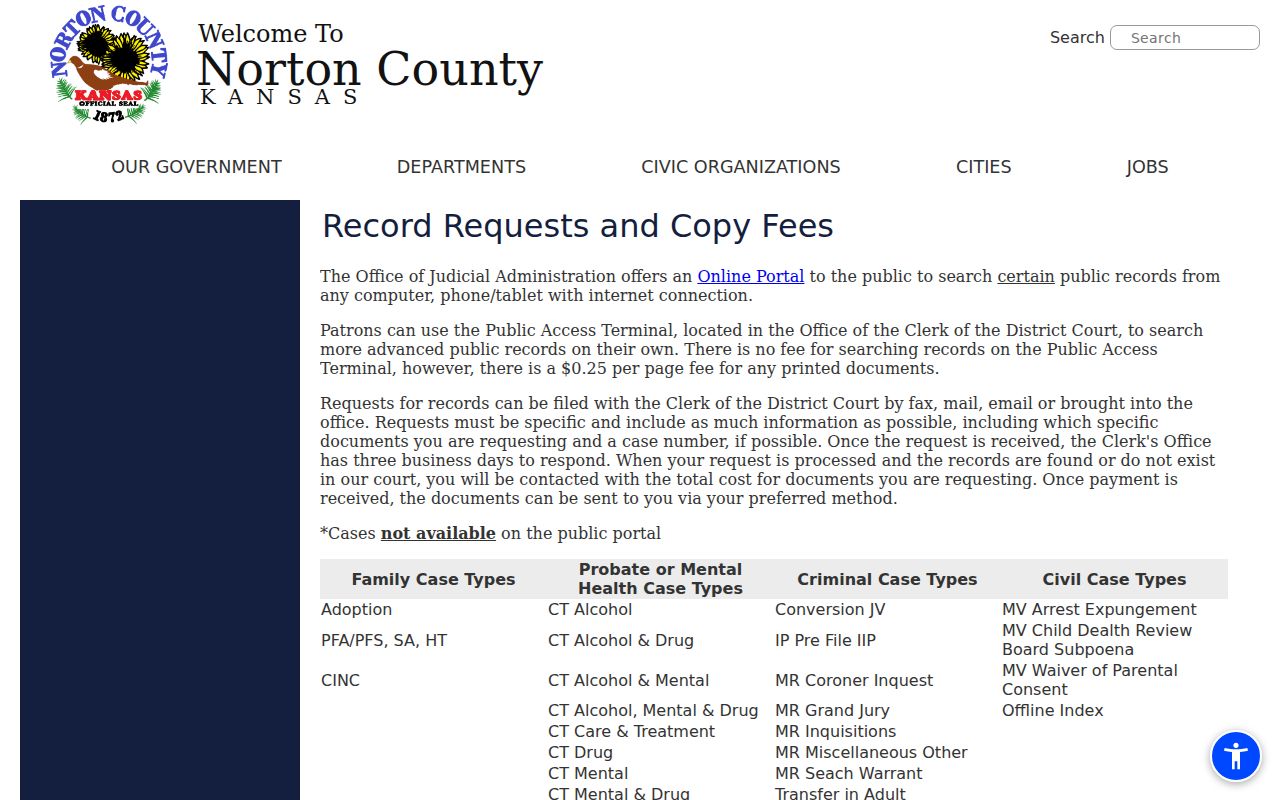
That official page ties together the written request, the clerk's response, and the payment sequence. All of it runs through the office that holds the Norton County court record you want.
Types of Court Records
The Clerk of the District Court holds Norton County case files across a wide span: criminal, civil, limited civil, domestic relations, probate, juvenile, small claims, traffic, fish and game citations, child support, adoption, marriage licenses, and related district matters. Broad custody does not mean full public access. Some categories stay restricted by law.
- A register of action lists dated activity and brief descriptions.
- A filed document may be a complaint, motion, order, judgment, return, or exhibit.
- A certified copy carries the clerk’s authentication.
- A transcript is a prepared record of spoken proceedings and may follow a separate request and fee path.
- Marriage, probate, adoption, and family records can have distinct access rules.
The Norton County legal forms gateway points to statewide forms. It is not a court-record request form.
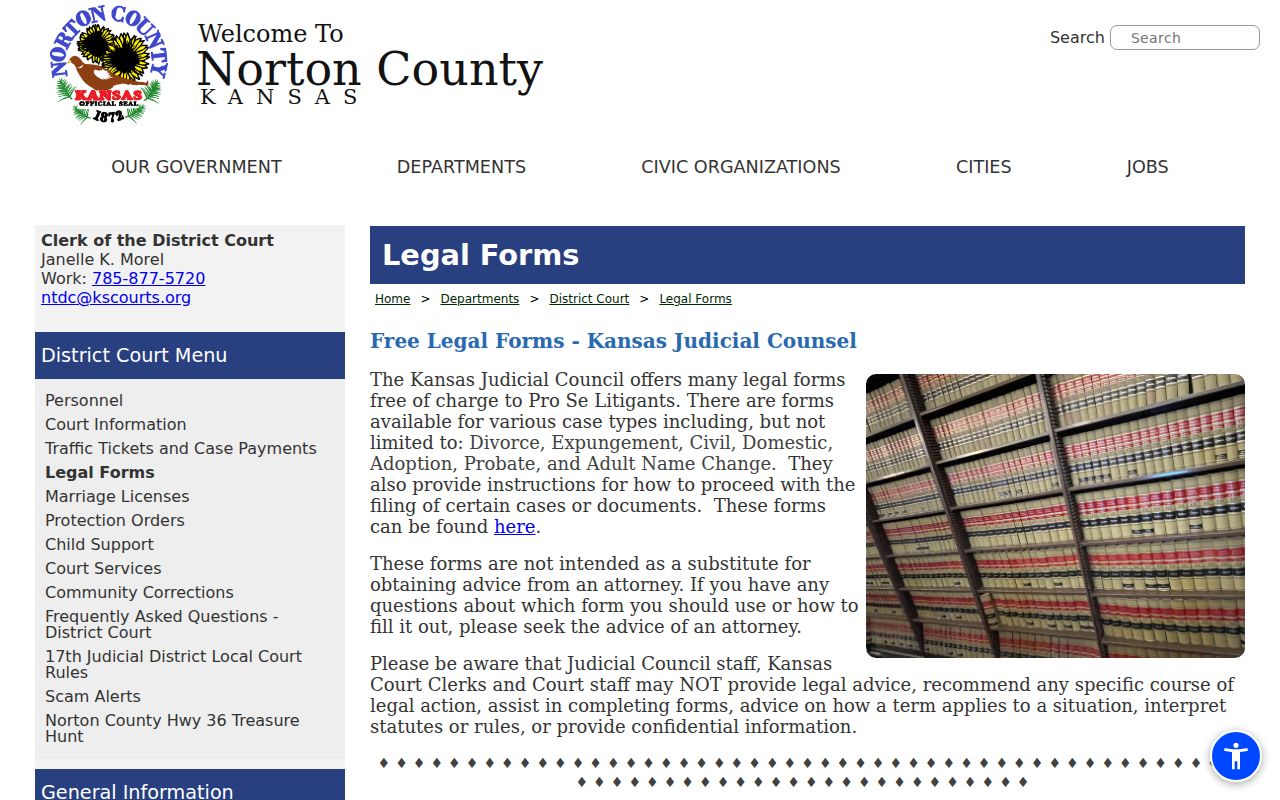
Forms start a new matter. A written record request is how you ask for a document already on file.
Norton County Record Response Timing
The county gives the clerk three business days to respond. That clock covers a reply, a clarification, or a cost estimate. It does not guarantee every file lands in your hands within three days. A large request, an older index, a restricted document, or a vague description can all add work. Payment comes at the end. The clerk finds the record or works out what can be supplied and quotes the charge.
A request that reads well helps everyone. Try this shape. "Please provide the public order dated [date] in case [number], and advise the cost for a certified copy sent by [delivery method]." That is far easier to answer than a demand for an undefined entire lawsuit file. It also gives the clerk room to say another office holds the item.
Note: the clerk accepts record-request email. That does not mean ordinary court filings can be sent by email.
What a Court Record Contains
Norton County describes a case record that runs in order. A case type and consecutive number come first. Papers filed, process requests, returns, appearances, orders, verdicts, judgments, payments, and their dates follow. The public register works as an index layer. It can point to a document without showing the full image.
| Case Header | Case number, court, case type, caption, filed date, and status. |
|---|---|
| Filed Papers | Public complaints, petitions, motions, responses, and other accepted papers. |
| Process | Requests for service, issued process, and returns when public. |
| Appearances | Recorded appearances and hearing participation entries. |
| Orders and Outcomes | Orders, verdicts, judgments, dispositions, and later activity. |
| Financial Entries | Permitted fee, cost, payment, or balance entries. |
| Access Flags | Document availability, restriction, sealing, or offline status where shown. |
Read each short entry with its date and the later orders around it. A docket label never substitutes for the signed document itself.
Norton County Court Record Terminal
The Public Access Terminal sits in the third-floor clerk's office at the Norton County Courthouse. Searching is free. It serves county-local public information. It can also reach some converted or advanced records the web portal does not carry. Kansas Rule 106B explains why terminal and internet access can diverge.
Bring a case number and an event date. Ask before printing. A terminal printout is a plain copy until the clerk certifies it. The official sources promise no remote login, bulk download, export controls, or nonpublic access at the terminal. Older record? Ask the clerk about the offline index and the historical route.
Certified Copies and Fees
Norton County posts a simple local fee schedule. Searching at the terminal is free. Paper copies run $0.25 per page. Certification costs $1.00 per certification, separate from page charges, and a larger request may add a $5.00 research fee. Transcript and special reproduction amounts are not published locally, so ask the clerk for a quote.
| Item | Published Amount | Confirm |
|---|---|---|
| Public terminal search | Free | Availability during clerk office hours |
| Plain paper copy | $0.25 per page | Page count and delivery method |
| Certification | $1.00 per certification | Whether one certification covers the requested set |
| Larger-request research | Possible $5.00 | Whether it applies in addition to copying |
| Transcript or special copy | Not published | Current clerk or reporter quote |
A file you save or print yourself is not a certified copy. When you order from the Norton County clerk, name the exact order and its date, and say you want it certified. Confirm the total fee first, then make sure the clerk's certification is attached when your copy arrives.
Norton County Historical Court Records
A missing web page tells you little. Old Norton County records still exist; they just sit in different offices. Some marriage, divorce, will, and probate questions belong with the District Court Clerk. The Register of Deeds holds other historical land and county records. The current portal covers only part of the story. Treat it as a starting point rather than a full archive reaching back to the county's organization.
Before you request anything, learn which office keeps the record. Name the date range you need. A judgment can appear in the register. Its signed image may stay offline. An exhibit may be oversized, restricted, or held in another format. A transcript may require a reporter. None of that means the event failed to happen. These are questions of record type and custody, nothing more.
Public Access and Sealed Records
K.S.A. 45-218 requires a records request to reasonably describe what you want.
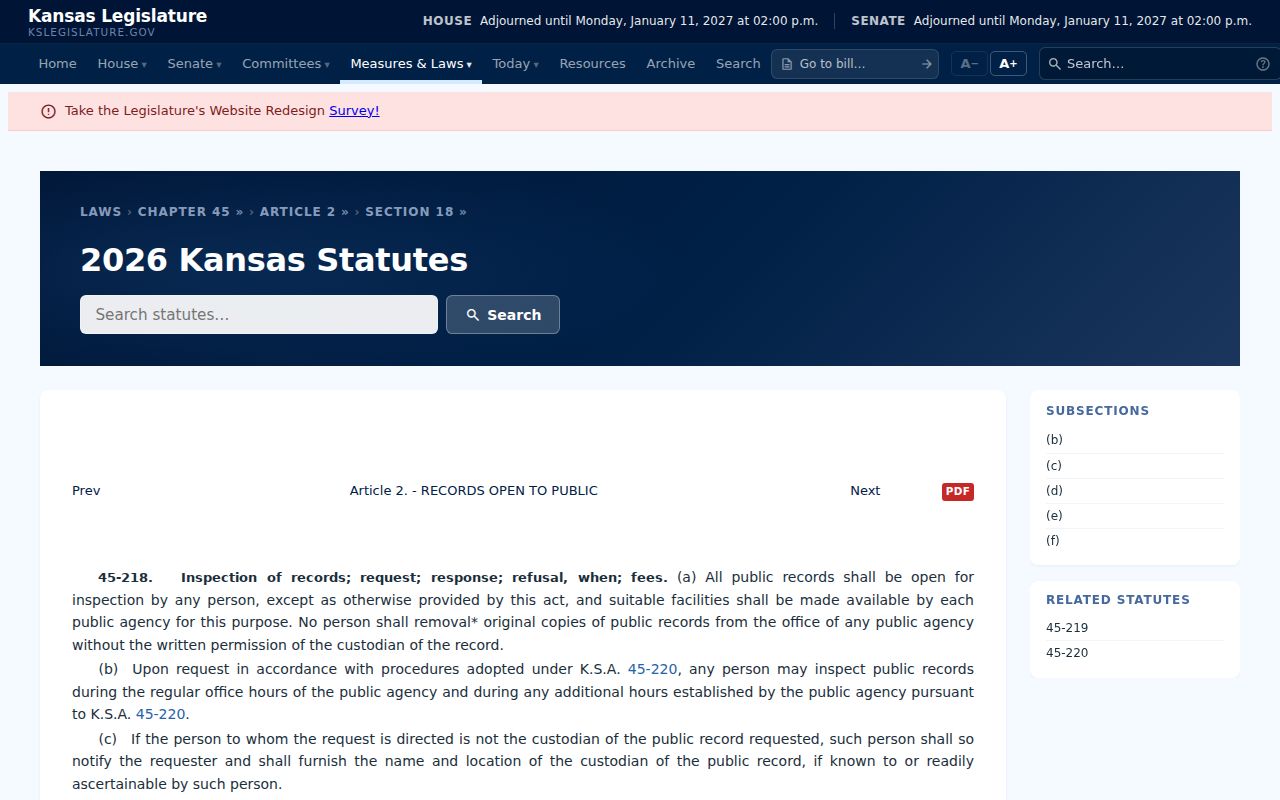
The statute calls for a specific request and a practical response from the clerk, not a blanket demand for everything on file. K.S.A. 45-221 lists exemptions and allows separation or redaction where the law permits it.
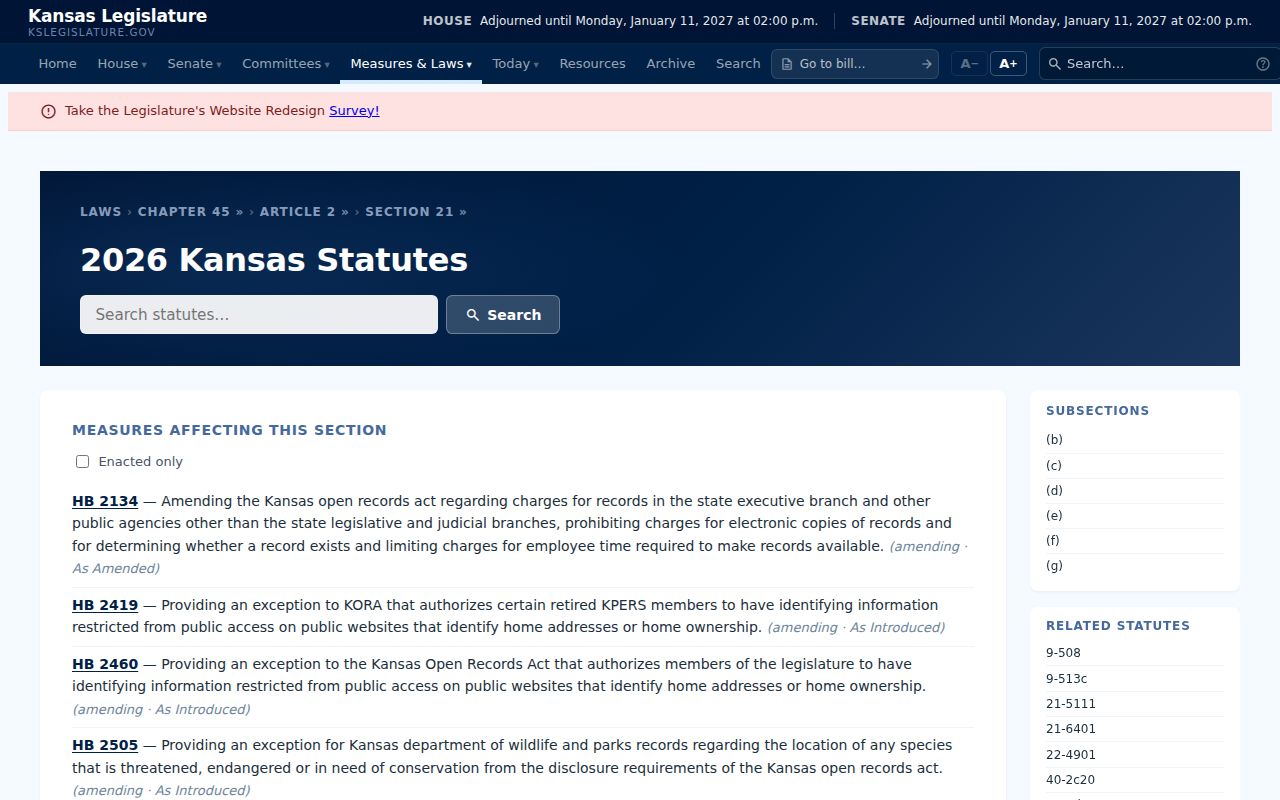
The exemptions explain how public and protected parts can share one Norton County court file.
Kansas access framework: KORA works with Supreme Court Rules 22 and 106B, confidentiality statutes, and court orders. A court-held item is not public merely because the clerk possesses it.
Clerk of the District Court, Norton County
105 S Kansas Avenue, 3rd Floor
P.O. Box 70, Norton, KS 67654
785-877-5720
Fax: 785-877-5722
Email: ntdc@kscourts.gov
Norton County Court Record Safety
Before paying anything, confirm the quoted total with the official clerk contact. Norton County's own scam alert is blunt. Real court communications never demand gift cards or cryptocurrency. They never seek bank, card, or identity data on a scam call. Leave private identifiers out of your written request. Do that unless the clerk says the law requires one.
If a file is sealed, juvenile, expunged, or otherwise restricted, ask which rule applies. Ask also whether a public redacted portion exists. A denied document request is not an opening for a broad name search. The office that holds the record and the court decide lawful access together.